
What if Eid came every week?
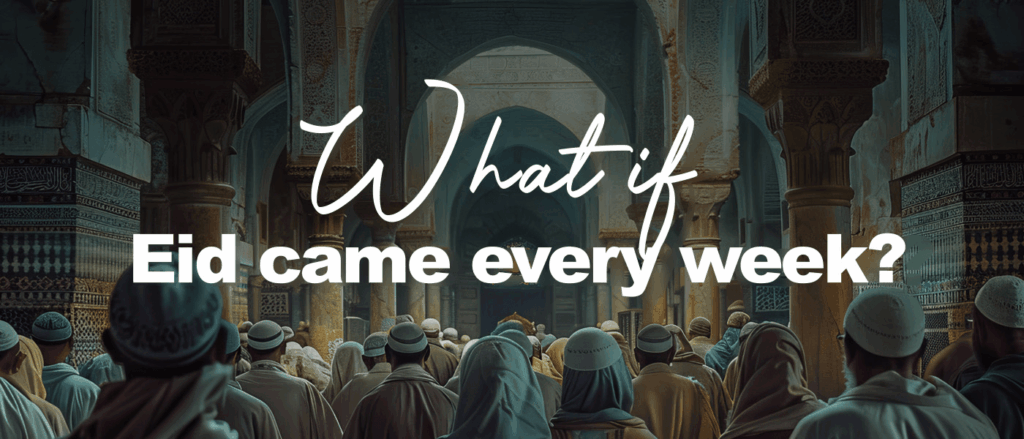
When we think of Eid, our minds often drift to the radiant mornings of Eid ul Fitr and Eid ul Adha – days filled with heartfelt prayers, dazzling outfits, warm family embraces, and tables overflowing with delicious food. These moments are etched into our memories as sacred celebrations of faith, unity, and gratitude. But here’s a question that might surprise you: What if Allah (SWT) gave us another Eid – one that comes not once a year, but every single week? Would we recognize it? Would we honor it the same way? Well, He (SWT) did. That weekly Eid is Jumu’ah, or Friday. And while many of us rush through it as just another workday or school day, the truth is far more profound. Jumu’ah isn’t just a midday prayer – it’s the most blessed day of the week, handpicked by Allah (SWT) for mercy, remembrance, and spiritual renewal. The Prophet Muhammad (SAW) even called it a day of Eid for the Muslim ummah. So why is this weekly celebration so often overlooked? What makes Jumu’ah spiritually unique, and how can we reclaim its joy and significance in our lives? In this article, we’ll uncover the hidden beauty of Jumu’ah, explore its divine purpose, and ask: What would our lives look like if we treated every Friday like Eid? Jumu’ah is the day chosen by Allah (SWT) The significance of Friday is that it is a day chosen and honored by Allah (SWT) Himself. In a famous hadith, the Prophet (SAW) is recorded to have said, “The best day the sun rises over is Friday. On it, Adam was created, on it he was admitted into Paradise, on it he was expelled from it, and the Hour will not be established except on a Friday.” (Sahih Muslim) This narration reveals that Friday is tied to the most significant events in human history from the creation of mankind to the end of time. Unlike other religions that sanctified Saturday, such as the Jewish people, or Sunday, like the Christian people, Allah (SWT) gave Friday to the Muslims as a day of remembrance and gathering. In Surah Al-Jumu’ah, Allah (SWT) says, “O believers! When the call to prayer is made on Friday, then proceed diligently to the remembrance of Allah and leave off your business. That is best for you, if only you knew.” (The Clear Quran®, 62:9) This verse makes it clear that Jumu’ah is not an ordinary day, it is a weekly divine appointment that believers are expected to honor. Friday as the weekly Eid The term “Eid” in Arabic means a “recurring celebration.” While we’re familiar with the two annual Eids, the weekly Eid of Jumu’ah is equally significant, if not more so. Ibn Abbas has narrated, “Friday is a day of Eid, so do not fast on it unless you fast a day before or after it.” (Sunan At-Tirmidhi) Just like Eid ul Fitr and Eid ul Adha, Jumu’ah is meant to be a day of joy, cleanliness, and spiritual connection. The Prophet (SAW) encouraged Muslims to bathe, wear clean clothes, apply fragrance, and arrive early for the Friday prayer. These are all markers of festivity and dignity. Moreover, the communal aspect of Jumu’ah echoes that of Eid. We gather in large numbers at the masjid, listen to a khutbah, and pray together in unity. This weekly congregation strengthens not just our bond with Allah (SWT), but also with the wider Muslim community. The spiritual and worldly benefits of Jumu’ah Beyond its symbolic status, Jumu’ah is packed with spiritual rewards. The Prophet (SAW) was recorded in a hadith to have said, “There is a moment on Friday during which if a Muslim stands in prayer and asks Allah for something good, He will grant it.” (Sahih Muslim) While scholars differ on the exact timing of this moment, many agree that it likely falls in the final hour before Maghrib. This makes Jumu’ah a golden opportunity for dua and introspection. Additionally, attending Jumu’ah prayer serves as a weekly purification of sins. The Prophet (SAW) said, “Whoever performs ghusl on Friday, goes early to the mosque, listens attentively to the sermon, and refrains from idle speech, will have their sins forgiven between that Friday and the next, along with three extra days.” (Sahih Muslim) This means that Jumu’ah acts as a spiritual reset button, offering a regular opportunity for repentance and renewal. Just as Eid marks the end of Ramadhan or the conclusion of Hajj, Jumu’ah renews our commitment to faith each week. Reviving the barakah and rahmah of Jumu’ah in our lives Given all of this, the question arises: Why do so many of us treat Jumu’ah as just another Friday? Part of the answer lies in our fast-paced, secular routines. Work, school, and daily responsibilities often overshadow the spiritual value of the day. However, reclaiming Jumu’ah does not necessarily require dramatic changes, it begins with small, intentional steps: Prepare for it like you would for Eid. Take ghusl, wear your best clothes, and make the day feel special. Make time for the masjid, by attending the khutbah attentively and early, not rushed or distracted. Disconnect and reflect by reciting Surah Al-Kahf, give abundant salawaat on the Prophet (SAW), and take out time for dua. Create family traditions such as sharing meals, visiting relatives, or teach your children the significance of the day. These simple efforts can transform Jumu’ah into a truly joyful and meaningful experience, a weekly source of light and strength in our lives. This is a weekly gift that is not to be ignored In a world where spirituality is often sidelined, Jumu’ah is a precious weekly reminder of our purpose and our connection with Allah (SWT). It is not a burden, but a blessing, a celebration, not a chore. It’s a weekly Eid given to this Ummah as a sign of Allah’s (SWT) mercy and preference for us. Let us not ignore this gift. Instead, may we honor it, cherish it, and revive it
Adhān 101: How to respect the most important call to action of your deen
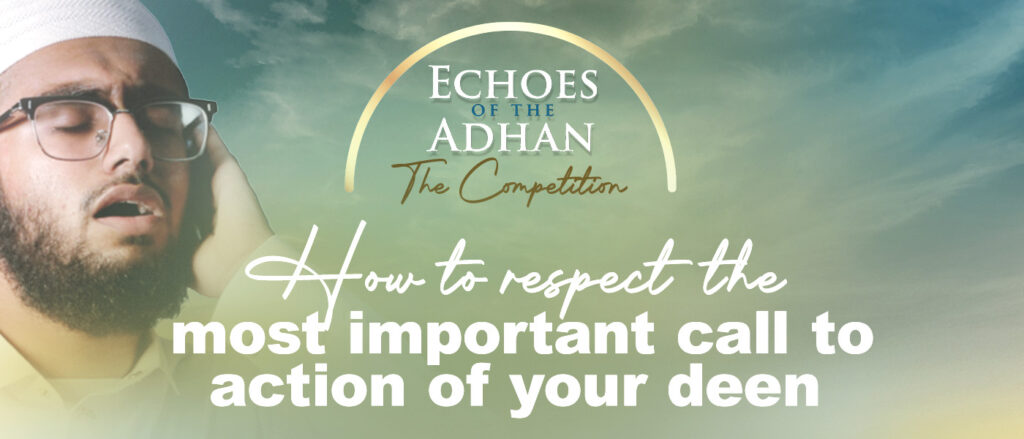
Of the things that stir the soul of a Muslim – the Adhān is perhaps one of the most transcendent. The beautiful, echoing call reminds us five times a day that it’s time to leave the world behind and turn to the One who created us. Whether you live in a Muslim-majority location where the Adhān rings out from every mosque or hear it faintly on your phone app in a busy, Muslim-minority city, the spiritual weight of those words never changes. But how often do we stop to think, “Am I observing the right etiquette when I hear the Adhān?” Additionally, what about the muadhin, the one who calls it – what are his responsibilities, and how can we honor this noble role? In this article, we will explore the etiquettes, or adab, that both the caller and the listener of the Adhān should uphold, supported by verses from The Quran and authentic ahadith. Whether you are giving the Adhān yourself or simply hearing it in a setting, there are rewards to be gained and beauty to be experienced when we treat it with the reverence that it deserves. Why is the Adhān so important? The Adhān isn’t just an announcement of the prayer times. In fact, that would be a very superficial way to look at the most important recitation of the Islamic faith that calls you to fulfill one of the 5 pillars of Islam. It is a statement of tawheed – a declaration of your faith – and it is an open invitation to success in both this life and the akhirah. In Surah Fussilat, Allah (SWT) says, “And whose words are better than someone who calls others to Allah, does good, and says, ‘I am truly one of those who submit?’” (The Clear Quran®, 41:33) Although this verse isn’t limited to the muadhin, many scholars mention that it beautifully includes the one who calls to prayer, because he is literally calling people to Allah (SWT), five times a day. The Prophet (SAW) has also said, “The muadhinun (callers to prayer) will have the longest necks on the Day of Resurrection.” (Sahih Muslim) Scholars have interpreted this to mean they will be among the most honored, most distinguished people on that Day! What are the etiquettes for the person giving the Adhān? Being a muadhin is not a casual task. It is an act of worship and, like all acts of worship in Islam, it must be approached with care, sincerity, and a desire to please Allah (SWT). The purity of your niyyah: Every act begins with your intention, and the Adhān is no different. The muadhin should make the intention to call people to the worship of Allah (SWT), seeking only His pleasure. Not recognition or praise from others. As Allah (SWT) says, “…even though they were only commanded to worship Allah alone with sincere devotion to Him in all uprightness, establish prayer, and pay alms-tax. That is the upright Way.” (The Clear Quran®, 98:5) Always be in a state of wudhu: While it is not fard, it is a highly recommended mustahab act for the muadhin to be in a state of wudhu out of respect for the sacred words he is about to pronounce. Facing the Qiblah: The Sunnah is to face the Qiblah when calling the Adhān, as this was the practice of Bilal ibn Rabah (RA) and was affirmed by the Prophet (SAW). Raising the voice clearly and beautifully: The Prophet (SAW) has said, “When you give the Adhān, raise your voice with it, for no jinn, human, or anything hears the voice of the muadhin except that it will testify for him on the Day of Resurrection.” (Sunan al-Nasa’i). Whether you’re using a microphone in a modern mosque or calling in an open field, clarity and sincerity matter more than volume. And if you’re blessed with a beautiful voice, use it to testify beautify the words. This, too, is part of honoring the call. Turning your head at specific phrases: It is Sunnah to turn the head (not the entire body) to the right when saying, “Hayya alas-Salaah” and then to the left when saying, “Hayya alal-Falah.” This is taken from the practice of Bilal ibn Rabah (RA) as observed by the Prophet (SAW). Space the phrases: Don’t rush. The muadhin should pause briefly between each phrase to allow those listening to repeat after him. This thoughtful delivery reflects the calm dignity of the prayer itself. Etiquettes for those listening to the Adhān If you are not the one calling the Adhān, you are still part of that moment, and there are rewards in store for you too. Usually, people continue in conversation or carry on their tasks while they hear the Adhān but, because this is the call of Allah (SWT), it deserves our undivided attention and, if we decide to prioritize other things over our Lord, then we indeed lose out on the rahmah and barakah that it brings. Repeat after the muadhin: The Prophet (SAW) said, “When you hear the muadhin, say what he says.” (Sahih Bukhari) So when you hear, “Allahu Akbar,” then you must also say in your heart, “Allahu Akbar.” When you hear, “Ash hadu an laa ilaaha ilallah,” say the same to yourself and truly mean it. When you hear, “Hayya alas-Salaah,” and “Hayya alal-Falaah,” respond with, “La hawla wa la quwwata illa billah.” This response acknowledges that only Allah (SWT) can give us the strength to answer the call and stand in prayer. Send salawat on the Prophet (SAW): After the Adhān, it is Sunnah to send peace and blessings upon the Prophet (SAW), “Allahumma salli ‘aala Muhammad wa’ala aali Muhammad.” The Prophet (SAW) himself has said, “Whoever sends blessings upon me once, Allah will send blessings upon him tenfold.” (Sahih Muslim) Make dua after the Adhān: The Prophet (SAW) has also taught us a specific supplication after the Adhān, “O Allah! Lord of this perfect call and the established prayer,
The surah that teaches us that every choice shapes our identity
The Quran often speaks to the heart not only through its words, but through the contrasts it paints. Surah al-Layl is one of the most powerful examples, a chapter of only 21 short ayaat that moves between opposites such as night and day, male and female, generosity and greed, ease and hardship. It is a surah that takes us by the hand and shows us that our choices shape our destiny. Revealed in Makkah, this surah came at a time when the believers were few, the trials were heavy, and the call to sincerity and sacrifice was urgent. Verses 1-3 Oaths by the night and the day وَٱلَّيْلِ إِذَا يَغْشَىٰ وَٱلنَّهَارِ إِذَا تَجَلَّىٰ وَمَا خَلَقَ ٱلذَّكَرَ وَٱلْأُنثَىٰٓ In these verses, Allah (SWT) swears by three things: the still, enveloping night; the bright, revealing day; and the creation of male and female. In The Quran, when Allah (SWT) swears an oath, it is to grab our attention before delivering a truth of immense weight. The night hides, covers, and calms. The day exposes, reveals, and awakens. Male and female complete and balance each other. These natural opposites remind us that, just as the created world has contrasts, so does human life because there are different paths that lead to different ends. Verses 4-7 The two paths إِنَّ سَعْيَكُمْ لَشَتَّىٰ فَأَمَّا مَنْ أَعْطَىٰ وَٱتَّقَىٰ وَصَدَّقَ بِٱلْحُسْنَىٰ فَسَنُيَسِّرُهُۥ لِلْيُسْرَىٰ Here lies the heart of the surah. People are not the same in their striving. Some strive towards Allah (SWT), and some strive away from Him. The first path is the path of giving, of generosity. This isn’t just charity, it’s the giving of oneself in the forms of time, knowledge, and compassion. The person who combines this with taqwa and believes in al-husna, the ultimate promise of Paradise, will find that Allah (SWT) smooths his road to what is good. Ibn Kathir mentions that al-husna here means the reward of Jannah, and that belief in it shapes a person’s actions and attitudes. Verses 8-10 The other path وَأَمَّا مَنۢ بَخِلَ وَٱسْتَغْنَىٰ وَكَذَّبَ بِٱلْحُسْنَىٰ فَسَنُيَسِّرُهُۥ لِلْعُسْرَىٰ The second path is the opposite, for example, a life of hoarding, of arrogance, and of thinking one needs no guidance. This person denies the reality of the hereafter and, as a result, Allah (SWT) makes the path of difficulty easy for him – not meaning worldly hardship, necessarily, but spiritual ruin. His steps take him easily towards Hell, just as the righteous find their steps eased toward Paradise. At-Tabari explains that this “easing” is a consequence of Allah’s (SWT) justice and that, when a person repeatedly chooses evil, Allah (SWT) allows their heart to incline toward it more and more. Verses 11-16 A warning of what awaits وَمَا يُغْنِى عَنْهُ مَالُهُۥٓ إِذَا تَرَدَّىٰٓ إِنَّ عَلَيْنَا لَلْهُدَىٰ وَإِنَّ لَنَا لَلْـَٔاخِرَةَ وَٱلْأُولَىٰ فَأَنذَرْتُكُمْ نَارًۭا تَلَظَّىٰ لَا يَصْلَىٰهَآ إِلَّا ٱلْأَشْقَى ٱلَّذِى كَذَّبَ وَتَوَلَّىٰ Here Allah (SWT) strips away illusions, for example, that wealth cannot save you when your soul falls into the abyss. It is Allah (SWT) alone who shows the path of guidance, and both this world and the next are His to control. The Fire described here is talazza which is blazing and scorching. One that the “most wretched” (al-ashqa) will enter, and they are those who denied the truth and turned their backs on it. This is not a description of a person who sinned and then repented, but of the one who knowingly rejected faith and then refused to turn back. Verses 17-21 The successful ones وَسَيُجَنَّبُهَا ٱلْأَتْقَى ٱلَّذِى يُؤْتِى مَالَهُۥ يَتَزَكَّىٰ وَمَا لِأَحَدٍ عِندَهُۥ مِن نِّعْمَةٍۢ تُجْزَىٰٓ إِلَّا ٱبْتِغَآءَ وَجْهِ رَبِّهِ ٱلْأَعْلَىٰ وَلَسَوْفَ يَرْضَىٰ This ending is a mirror to the beginning. The righteous give, not for reputation, not for favors, and not to be praised, but purely for Allah (SWT). Their giving is a means of tazkiyah, purification of the soul. Ibn Kathir and others mention that these final verses were revealed about Abu Bakr as-Siddiq when he freed slaves like Bilal ibn Rabah purely for the sake of Allah (SWT). However, the lesson is universal: sincerity is always key. Allah (SWT) promises such a person “wa la sawfa yarda” – “they will certainly be pleased.” Ultimate contentment is knowing that we have earned the pleasure of Allah (SWT) in the next life, and the joy of seeing that one’s sacrifices were never in vain. This surah teaches us that life is a choice between two paths, and we choose daily through our actions, words, and intentions. Generosity is always worth more than money, as it is a reflection of the heart’s openness to Allah (SWT). Wealth and self-sufficiency can deceive unless grounded in faith, or else they may lead to spiritual ruin. Sincerity is everything because deeds done for the sake of Allah (SWT) are the ones that last. Surah al-Layl is short, but its impact is lasting. It’s a reminder that life’s journey is not random. We are all traveling, and our choices are steering us toward either ease or hardship in the Hereafter. The night will come, the day will shine, but only those who give, fear Allah (SWT), and seek His pleasure will find themselves in eternal light. Oh Allah (SWT)! Make us among those whose paths are eased toward Paradise, whose hearts are purified through generosity, and whose only goal is Your pleasure. Ameen!
How the Adhān guides us back to our purpose
Five times a day, from rooftops to minarets, a voice rises into the air. It weaves through busy streets, slips through open windows, and settles into hearts. This is the Adhān: the call to prayer that commands the entire earth and its bounties to come to a standstill when it is announced. For some, it marks the moment to roll out the prayer mat and turn to Allah (SWT). For others, it’s a familiar background sound, always there since the time of our birth, yet we have rarely reflected upon it as Muslims. The term Adhān, derived from the Arabic root adhina, meaning “to listen, to hear, or be informed about,” translates directly to “announcement.” It carries profound significance in Islamic tradition as the call to prayer, serving not just as a signal but as a spiritual invitation to pause, reflect, and connect with the divine. The linguistic roots of Adhān emphasize its purpose: to awaken awareness and summon attention, reminding believers of their daily rhythm of worship and devotion. It is a living, breathing symbol of Islam. Indeed, it is also a spiritual wake up that reconnects us to our purpose, no matter where we are or what we find ourselves doing. Mankind’s first call to prayer: the origin story The story of the Adhān begins in Madinah over 1,400 years ago. As the Muslim community grew under the guidance of the Prophet Muhammad (SAW), the need arose for a unique way to gather people for prayer. The companions suggested different ideas, such as using a bell like Christians, a horn like the Jews, or a flag to signal the time. However, none felt special enough for the Ummah of Muhammad (SAW). Then, Abdullah ibn Ziyad had a dream. In it, he saw a man carrying a bell. When asked if he would sell it, the man instead taught him beautiful, powerful words that immediately lifted his heart and called people to worship Allah (SWT) alone. When Abdullah ibn Zayd told the Prophet (SAW) about his dream, the Prophet (SAW) confirmed it was guidance from Allah (SWT). He instructed him to teach the words to Bilal ibn Rabah, a former slave whose deep, resonant voice could carry across the city. And so, Bilal (RA) climbed to a high place, took a deep breath, and the very first Adhān filled the streets of Madinah. Imagine how empowering that moment must have been when a clear voice rang over the rooftops, through the palm groves, across the open desert to proclaim the greatness of Allah (SWT) for the first time in public! Of course, Shaytan did not like it, but that’s just more reason for us to love and respect it all the more! The Prophet (SAW) has said in a powerful hadith, “When the Adhān is pronounced, Shaytan takes to his heels and passes wind with noise during his flight in order to not hear the Adhān. When the Adhān is completed, he comes back and again takes to his heels when the Iqama is pronounced and after its completion he returns again till he whispers into the heart of the person (to divert his attention from prayer) and make him remember things which he does not recall to his mind before the prayer and that causes him to forget how much he has prayed.” (Sahih Bukhari) What is the meaning of each phrase in the Adhān? While the Adhān is short, every phrase carries a significant weight to it which is why, whenever we hear the call to prayer, we must pause what we are doing, and give this important reminder our full focus and attention with open minds, and cleansed hearts. الله أكبر “Allah (SWT) is The Greatest.” These words, repeated four times at the start, break through the noise of life, and we are reminded of The One who is above all. أشهد أن لا إله إلا الله “I bear witness there is no God except Allah (SWT).” This is our own personal testimony that we vow to every single day of our lives, and will continue to testify to even within our graves. أشهد أن محمدًا رسول الله “I bear witness that Muhammad (SAW) is the Messenger of Allah.” With this being a continuation of our testimony, because our entire existence is meant to follow our Prophet’s (SAW) example in worship, character, and compassion. حي على الصلاة “Come to prayer!” How fortunate we are that we are being invited to leave behind all distractions and meet Allah (SWT) in salaah. حي على الفلاح “Come to success!” A gentle reminder that true success is not in wealth or power, but in answering Allah’s (SWT) call – clearly equating prayer to success, where the latter cannot truly exist without the former. الله أكبر “Allah (SWT) is The Greatest.” We hear this repeated twice more at the end so that it really sinks into our hearts. لا إله إلا الله “There is no God except Allah (SWT).” This is the final seal, and the truth that seals our lives. A hadith was recorded on the authority of Abdul Rahman, “Abu Sa’id Al-Khudri told my father, ‘I see you liking sheep and the wilderness. So whenever you are with your sheep or in the wilderness and you want to pronounce Adhān for the prayer, raise your voice in doing so, for whoever hears the Adhān, whether a human being, a jinn or any other creature, will be a witness for you on the Day of Resurrection.’ Abu Sa’id said, ‘I heard it (this narration) from the Apostle of Allah (SAW).’” (Sahih Bukhari) The call to unity One of the most powerful things about the Adhān that everyone notices is how it connects our Ummah together. As the sun rises in one part of the world, the first Adhān of Fajr salaah is called. As it ends there, it begins somewhere else. This is an unbroken chain of voices calling to prayer across continents, time zones, and cultures. It’s
Ali ibn Abi Talib (RA): the legacy of honor that will never fade

Ali ibn Abi Talib (RA) is among the most honored companions of the Prophet Muhammad (SAW). His life was inseparable from the early history of Islam, marked by courage, wisdom, and unwavering loyalty. As a cousin, son-in-law, and close companion of the Prophet (SAW), Ali ibn Abi Talib (RA) stood firm in trials, fought bravely in battles, and served Islam with deep sincerity and devotion. The unique birth of Ali ibn Abi Talib (RA) Ali ibn Abi Talib (RA) was born in Makkah around 600 CE, into the noble Banu Hashim clan. His father, Abu Talib, was a respected leader, and his mother, Fatima bint Asad, was beloved by the Prophet (SAW). Per historical reports, Ali ibn Abi Talib (RA) was born in the Ka’bah – a very rare occurrence in history! Undoubtedly, his noble lineage and upbringing prepared him for a life of service to Islam. The first youth to embrace Islam… Ali ibn Abi Talib (RA) was raised in the Prophet’s (SAW) household from the time when he was only a baby. At around ten years old, he witnessed the Prophet Muhammad (SAW) and Lady Khadijah bint Khuwaylid (RA) in prayer and asked about their worship. The Prophet (SAW) explained the message of Islam, and Ali ibn Abi Talib (RA), though moved, responded that he needed to consult his father, Abu Talib, before making a decision. The Prophet (SAW) advised him to keep the matter private for the time being. After a night of reflection, Ali ibn Abi Talib (RA) returned to declare his belief, becoming the first child to accept Islam – not out of imitation, but through deliberate thought and spiritual conviction. This is incredible because a child of such young age comprehending the gravity of such a decision and of revelation itself is unthinkable. His early devotion is praised in hadith, including the Prophet’s (SAW) statement: “Ali prayed with me seven years before anyone else prayed” (Musnad Ahmad). His faith was forged in adversity, and he remained steadfast throughout his life and he was beside the Prophet (SAW) in both hardship and triumph. He was a trusted companion in every stage of the Prophet’s (SAW) mission, from the early days in Makkah to the final moments of revelation. His loyalty and closeness to the Prophet (SAW) were unmatched, and his presence was central to many pivotal events in Islamic history. The record of his virtues is vast… Ali ibn Abi Talib’s (RA) virtues are well-documented in hadith collections. His bravery, knowledge, and piety were praised by scholars such as Imam Ahmad ibn Hanbal, who said, “No companion of the Messenger of Allah (SAW) has been narrated with as many virtues as Ali ibn Abi Talib (RA).” His legacy is not just a list of merits; it reflects a life of service, sacrifice, and moral excellence. The night of the Hijrah When the Quraysh leaders plotted to assassinate the Prophet Muhammad (SAW), they chose young men from each tribe to strike together, hoping to avoid blame falling on any one clan. That night, the Prophet (SAW) entrusted Ali ibn Abu Talib (RA) with two tasks: to sleep in his bed as a decoy and to return the trusts left with him to their rightful owners. Ali ibn Abi Talib (RA) accepted the mission without hesitation, knowing the danger. Wrapped in the Prophet’s (SAW) cloak, he lay in the bed, risking his life for the safety of the Messenger (SAW). The Quraysh were deceived, and the Prophet (SAW) safely departed for Madinah. As requested, Ali ibn Abi Talib (RA) later fulfilled the trust of returning every item that had been left for safekeeping with the Prophet (SAW) – even to those who opposed Islam. His actions consistently reflected deep loyalty and commitment to justice. The soldier that caused the enemies to flee the battlefield with fear Ali ibn Abi Talib (RA) was known for his bravery, but his courage was always rooted in faith and service to Islam – not personal glory. In every battle, he fought to defend the truth and protect the Prophet (SAW). Battle of Badr In Islam’s first major battle, the Muslims were vastly outnumbered. It was narrated from Abu Salih al-Hanafi that the Prophet (SAW) said to Ali ibn Abi Talib (RA) and Abu Bakr (RA) on the day of Badr, “The Angel Jibreel (AS) is with one of you and the Angel Mika`eel (AS) is with the other, and the Angel Israfeel (AS), a mighty angel, is present at the fight” – or he said, “is present in the ranks.” (Musnad Ahmad) Ali ibn Abi Talib (RA) fought valiantly, defeating several key Quraysh warriors, including Walid ibn ‘Utbah. His strength and resolve helped secure a decisive victory for the believers. Battle of Uhud When the tide turned against the Muslims due to a tactical error, many fled. Ali ibn Abi Talib (RA) remained by the Prophet’s (SAW) side, shielding him from attackers and repelling enemy advances. His loyalty never wavered, even in the face of overwhelming danger. Battle of Khandaq During the siege of Madinah, the Quraysh champion ‘Amr bin ‘Abd Wudd crossed the trench and challenged the Muslims. Ali ibn Abi Talib (RA) stepped forward alone. The Prophet (SAW) said, “The whole of faith has gone forth to face the whole of disbelief” (Musnad Ahmad). Ali ibn Abi Talib (RA) defeated him, breaking the enemy’s morale and helping turn the tide of battle. Battle of Khaybar At Khaybar, the Prophet (SAW) declared, “Tomorrow I will give the banner to a man who loves Allah and His Messenger, and Allah and His Messenger love him.” (Sahih Muslim) That man was Ali ibn Abi Talib (RA), despite suffering from an eye ailment. After the Prophet (SAW) healed him, Ali ibn Abi Talib (RA) led the charge, famously removing the fortress gate and using it in battle. His leadership brought victory to the Muslims. Ali ibn Abi Talib’s (RA) blessed marriage to Lady Fatima bint Muhammad (RA) When the time came for Lady Fatima (RA), the beloved daughter of
Choose your friends like your akhirah depends on it

If you died tonight, would your friends be the type to make dua for you all night as you endure the hardships of the grave? Or would they forget about you? Are the people you call your “closest friends” helping you build your akhirah or are they only helping you get pleasures from this dunya? Are they the type of people to remind you to pray, stay away from haram, and remember Allah (SWT)? Are you the kind of friend that helps someone else become a better Muslim? Would you feel confident standing beside your friends on the Day of Judgment? Or would you look at them and feel a sense of regret? The Best Role Model in Friendships: Prophet Muhammad (SAW) Friendships are one of the most sacred things in a person’s life, and choosing the most righteous ones is important not only for this world because we are recognized by those surrounding us, but also for the eternal world because they become a support system who will pray that our souls reach the highest level in Jannah. Indeed, friendships are blessings and they are tests. We have those who are beside us to support us even before a single teardrop can fall. There are others who have hurt us in such a way that we spend nights on the musallah bearing our hurt to our Lord. As youth, friendships offer you the greatest lessons on how to treat people, and they allow you to discover more about yourself (how you like being treated, what characteristics you appreciate, what characteristics you should abstain from, etc). However, our greatest role model and the best teacher of friendships, Prophet Muhammad (SAW), has truly set the standard on which types of friendships bring a mo’min closer to Allah (SWT). For example, let us look at the beautiful bond of brotherhood and friendship between the Prophet (SAW) and Ali ibn Abu Talib (RA). The Night of Loyalty Imagine the scene. It was the darkest hour of the night in Makkah. The streets were silent, but a deadly plan was in motion. Outside of the home of the Prophet (SAW), young men from the Quraysh tribes stood waiting, armed & ready to assassinate the Messenger (SAW) at dawn. They were desperate. The message of tawheed was spreading too quickly, and they had made a plan to end the life of the Prophet (SAW) before he (SAW) could escape to Madinah. Yet, inside the house, another plan was unfolding simultaneously, and this one was crafted by divine wisdom. While outside there was eagerness, inside the Prophet’s (SAW) home, there was peace and tranquility. He (SAW) turned to his beloved cousin and, with a calm but serious voice, said something that would forever define their bond, “O Ali, tonight I need you to sleep in my bed.” Ali ibn Abu Talib (RA), known for his bravery and devotion, agreed without hesitation. His act was not just one of courage, but of deep love, reverence, friendship, and loyalty to the Prophet (SAW). By Allah’s (SWT) mercy, the Prophet (SAW) departed safely and, when the Quraysh stormed the house, they found Ali ibn Abu Talib (RA) instead. By Allah’s (SWT) will, he, too, survived their attack. Further proof of his exemplary and honorable friendship, Ali ibn Abu Talib (RA) remained in Makkah briefly after this incident to return entrusted belongings before joining the Prophet (SAW) in Madinah. The Prophet (SAW) was known as Al-Amin (the Trustworthy), and Ali ibn Abu Talib (RA) was adamant upon ensuring his reputation remained intact. Can you think of a more perfect example of what a real friendship for the sake of Allah (SWT) looks like? We should all be so lucky. Not every friend is good for you, even if they’re fun to be around Sometimes, we confuse fun with friendship. It’s easy to chill with someone who makes you laugh, who gets your sense of humor, who’s “low drama.” But what happens when it’s time to stand up for something? When you’re tempted to fall into sin, to skip prayers, to cross a line with your behavior. Who’s beside you then? Who’s there to prevent you from falling down a deep hole, and to instead rise and become the best version of yourself? When Friends Become Enemies on the Day of Judgment There’s a reason Allah (SWT) gives us a harsh and clear warning in Surah Az-Zuhruf, “Close friends will be enemies to one another on that Day, except the righteous […].” (The Clear Quran®, 43:67) In other words, the people you laughed with, posted selfies with, and made plans with, they may stand against you on the Day of Judgement. Unless you helped each other fear Allah (SWT). Unless your love was based on truth, and not fleeting trends or “good times”. What makes a friend righteous in Islam? They remind you of Allah (SWT) gently. They are not really the ones who aggressively send you lectures of what scholars have to say about a particular issue you’re struggling with whilst simultaneously judging you, but they approach you with compassion and sincerity. They might say, “Let’s pray Asr together before we forget,” or they might send you verses from The Quran or ahadith throughout the day to show you that they’re thinking of you. This is the type of reminder Allah (SWT) praises in The Quran when He said in Surah Adh-Dhariyat, “But continue to remind. For certainly reminders benefit the believers.” (The Clear Quran®, 51:55) They also love you for the sake of Allah (SWT). It’s not love based on looks, vibes, or convenience, but on a shared goal of pleasing Allah (SWT). The Prophet (SAW) has said, “Whoever loves for Allah, hates for Allah, gives for Allah, and withholds for Allah—has completed their faith.” (Sunan Abi Dawud) They are honest with you, even when it is hard. They don’t just hype you up when you’re wrong. They remind you of the truth kindly because they care about your akhirah more than your ego. They’re with you, always in the dunya, and want to see you in Jannah. Some companions would
You cannot build an Ummah when you shut people out
How to make masajid more inclusive for youth, reverts, formerly incarcerated Muslims, and people trying to learn about Islam One day, we were told the heartbreaking story of a young man who visited a mosque for the first time after being released from prison. He stood just outside the entrance of the mosque, tattoos adorned his face and were inked on his arms. His shoes were in his hand, and he was scanning the room for a familiar face – or any face, really – that might welcome him during such a nerve-wracking experience and transition. It was his first time attending prayers in congregation since embracing Islam just a few weeks earlier. The khutbah that he had watched online was inspiring, and it was said that the mosque was a place of brotherhood, peace, and unity. But now, standing there alone with the community seeming to ignore him, he wasn’t so sure. He observed a group of older men, chatting in the corner in a language he didn’t understand. A few brothers glanced his way and then looked past him. No one came forward to greet him, no one asked him his name. Mustering up the courage, he went inside to quietly offer his prayers, and then he left before the last taslim had finished. Some of you reading this might feel that loneliness and nervousness, too, if you’ve experienced this in the past. Unfortunately, that just goes to show that this isn’t a unique story. It is, sadly, experienced by far too many reverts who have left everything behind for Islam. Many get alienated in their own homes or are exiled, their friends don’t even support them because of stereotypes – where else do they have left to go? And if the very community that they’ve happily accepted isn’t warm and receptive to them, then we are at fault for the hurt they experience and must quickly rectify this wrong approach. These stories belong to the brother or sister who just got out of prison after years of reflection and repentance. Or, the teenager struggling to reconnect with their faith after feeling judged for so many years. For many, the masjid, a place that should be the heart of our community, feels like the most unwelcoming place. That should not be the case. If the Prophet (SAW) were here today, would he (SAW) walk past someone new without greeting them? Would he (SAW) let a brother feel invisible in the house of Allah (SWT)? Of course not! His masjid in Madinah was a refuge for the lonely, a sanctuary for the sinner, and a home for the hopeful. So why isn’t ours? This article is a call to reflect, and to act. It’s a reminder that the masjid belongs to Allah (SWT) and everyone who seeks Him has a right to feel welcome. It’s also a guide on how we, as individuals and communities, can start building spaces that reflect the prophetic example of mercy, inclusion, and love for all. Because no one should ever feel like an outsider in the house of Allah (SWT). Understand who feels left out and why New Muslims often revert to Islam with little to no support system and, those that do have one, are incredibly blessed. Their families may have distanced themselves if they see their daughter either observing the hijab, or if their son wants to pray five times a day and wants to consume halal meat. Based on what they’ve seen in the media, their understanding of Islam is still developing, and often incorrect. As a result, instead of embracing the person in their family who is going through such a monumental change, they either ignore them or treat them severely. Formerly incarcerated Muslims often begin their journey towards Islam in prison, and they dedicate immense time and effort into learning, studying, applying, and practicing the faith. However, when they are released and they enter a masjid for the first time, they have reported feeling like they are under suspicion. These brothers and sisters need a community, not constant curiosity of what they’ve done. Teenagers and young adults, on the other hand, are the groups that most masajid try to attract so that the youth may firmly hold onto their faith in the West. But they often feel as if these places are only for adults because they only see adults leading and organizing. They opine that their ideas aren’t heard, their styles are criticized, and their questions about deen are dismissed. The result? They stop coming altogether. What the Sunnah of Rasulallah (SAW) teaches us The Prophet (SAW) built a community where every Muslim, regardless of past sins, tribal status, or knowledge level, felt seen and supported. For example, we have Bilal ibn Rabah who was a former slave, yet was honored to call the adhan. Abdullah ibn Mas’ud was mocked for his thin legs, but the Prophet (SAW) said his weight on the scale would outweigh a mountain. When a young man came to the Prophet (SAW) asking for permission to commit sin, the Prophet (SAW) didn’t cause an uproar, nor did he (SAW) reject him. He (SAW) listened patiently and attentively, reasoned with him, and made sincere dua for him. In a famous hadith he (SAW) has said, “Indeed, I was only sent to perfect good character.” (Musnad Ahmad) The Prophet (SAW) didn’t just tolerate people, he (SAW) transformed them, and we must model the same behavior. 5 ways to make your masajid more welcoming Designate a “welcome team” – the best people to do this job are the youth! Every masjid should have active volunteers, young and old, who make it their mission to spot new faces and greet them warmly. When someone new arrives at the masjid, they can offer a brief tour, share a prayer schedule, and answer any questions in a judgment-free way. Start organizing events that are catered to those often excluded. There could be programs such as monthly sessions
How to make The Quran meaningful again for the next generation
In today’s digital era, young Muslims face a unique set of challenges such as identity confusion, peer pressure, mental health struggles, and an overwhelming sense of information overload (through media consumed on social media for long hours). Amid these pressures, many youth feel increasingly disconnected from The Quran. To them, it may appear distant, difficult to understand, or simply not relevant to their daily lives. Yet for those who go out of their way to learn, study, and reflect upon The Quran, it remains exactly what it has always been, which is a divine source of comfort, truth, and guidance. The challenge, then, is not in The Quran itself, but in how it is introduced and experienced. The key to helping youth fall in love with The Quran lies in reintroducing it not as a textbook of rules, but as a personal companion and a mirror for the soul. Reframing The Quran Beyond Memorization One of the most common approaches to The Quran in traditional environments is emphasizing memorization, often without ensuring comprehension. While memorizing The Quran is a noble and sacred endeavor, it is rarely transformative unless paired with meaning. Youth who recite verses without understanding may begin to see The Quran as a ritualistic obligation rather than a source of insight. To change this, we must prioritize comprehension. Encouraging young Muslims to read The Quran alongside a trusted translation helps them see that The Quran speaks directly to their reality offering counsel, encouragement, and moral clarity. When a young person reads verses such as, “Surely with that hardship comes more ease,” (The Clear Quran®, 94:6) or, “Say, O Prophet, that Allah says, ‘O My servants who have exceeded the limits against their souls! Do not lose hope in Allah’s mercy, for Allah certainly forgives all sins. He is indeed the All-Forgiving, Most Merciful,’” (The Clear Quran®, 39:53) they begin to internalize The Quran as a source of emotional and spiritual healing. This shift, moving from memorization without meaning to understanding with reflection, can reframe the entire relationship a young person has with The Quran. Breaking the Association with Restriction Many youth today associate The Quran with restriction, meaning people only highlight the long list of obligations and prohibitions that are kept within it. While The Quran does contain divine law, it is, at its core, a conversation between the Creator and His creation. It speaks to the Prophet (SAW) in moments of despair, it addresses humanity’s doubts and fears, and tells stories of those who struggled and overcame. When youth are taught that The Quran is filled with love, mercy, and practical wisdom, not just commands, they begin to read it with curiosity rather than hesitation. By presenting The Quran as a living dialogue, we allow young Muslims to feel personally spoken to. They discover that The Quran doesn’t shame them for their struggles, but gently redirects them with compassion and purpose. This emotional accessibility is key to building a relationship that goes beyond obligation and grows into love. For The Quran to truly impact the hearts of the youth, it must be presented in a way that is relevant to the emotional and moral challenges they face. Whether it is dealing with social media pressure, struggling with self-worth, facing loneliness, or grappling with past sins, The Quran has beneficial advice to give. Stories of prophets who were rejected, verses that remind us of Allah (SWT)’s mercy, and reflections on the shortness of this life are not abstract teachings, they are divine answers to modern questions. The Power of Relevance: Modern Lessons from Ancient Texts For example, youth experiencing social interaction can find comfort in the story of the young men of the cave (Surah Al-Kahf), who withdrew from a corrupt society to preserve their faith. Those weighed down by guilt can be uplifted by the verse, “‘O My servants who have exceeded the limits against their souls! Do not lose hope in Allah’s mercy, for Allah certainly forgives all sins. He is indeed the All-Forgiving, Most Merciful,’” (The Clear Quran®, 39:53). These verses resonate because they affirm the struggles of youth while pointing them toward hope and redemption. One of the barriers preventing many young Muslims from engaging with The Quran is the fear of asking questions. If questions about Allah (SWT), certain verses, or Islamic rulings are met with shame or anger, youth will retreat from seeking understanding. We must remember that curiosity is not a sign of rebellion, but it is often the beginning of faith. The Prophet Muhammad (SAW) himself welcomed questions with patience and understanding, knowing that sincerity often begins with inquiry. Building a culture where youth feel safe to ask, explore, and even express doubt respectfully opens the door to deeper engagement with The Quran. Youth programs, family discussions, and community events should foster thoughtful dialogue guided by qualified scholars who can address doubts with knowledge and compassion. Faith grows not only in solitude but also in community. One powerful way to help youth build a relationship with The Quran is through group reflection where verses are read together, pondered, and discussed. Whether in a youth halaqah, an online group chat, or a weekly family circle, these shared experiences turn the Qur’an from a solitary task into a communal journey. In such settings, youth hear different perspectives, feel less isolated in their struggles, and are more likely to engage with the text. Reflection-based learning, where the goal is not to “finish a juz” but to feel a verse, allows the heart to absorb The Quran rather than merely complete it. Learning Through the Life of the Prophet (SAW The most powerful way to teach The Quran is to present it through the life of the Prophet Muhammad (SAW). He was, as Lady Ayesha Bint Abu Bakr said, “a walking Quran.” He embodied its teachings in the most beautiful way—with patience, mercy, and integrity. When youth see how The Quran was lived by the Prophet (SAW), not just recited, they begin to envision how it can shape their own lives. His tears
Lady Fatima bint Muhammad (RA):The Radiant Archetype of Pietyand Devotion
Have you ever known someone who lived their life unseen – hidden behind a veil of modesty and humility – yet is revered by billions across centuries and continents? In the tapestry of Islamic history, among the figures who command profound reverence is Lady Fatima bint Muhammad (RA), known by her honorific al-Zahra, “the Radiant”. As the daughter of the Prophet Muhammad (SAW) and his first and beloved wife Lady Khadija bint Khuwaylid (RA), Lady Fatima bint Muhammad (RA) was born into the noblest lineage and occupies a remarkable position in Islamic history. Her life, though brief, is a profound testament to devotion, resilience, and moral clarity, making her a timeless exemplar of faith and fortitude. Early Life Lady Fatima bint Muhammad (RA) entered a world forged by revelation and resistance. She was raised under the guidance of both a pioneering mother and the greatest of all creation (SAW), experiencing trials that would leave an indelible mark on her spirit. Her childhood was not one of indulgence – it was shaped by sacrifice and service. Indeed, Lady Fatima (RA) grew up during the early years of Islam when the Quraysh were growing hostile, and her father was already bearing the weight of divine revelation. As a child, Lady Fatima bint Muhammad (RA) witnessed her father being humiliated by Quraysh leaders who placed camel entrails on his back during prayer. She rushed to remove the filth and comfort him. This act of courage and compassion earned her the title Umm Abiha (Mother of Her Father) – a reflection of her nurturing presence and emotional closeness to the Prophet (SAW). Spiritual Eminence: Sayyidat Nisa al-Jannah And, while she was known by many esteemed names in terms of this world, her spiritual stature, too, was made clear when the Prophet (SAW) declared: ❝Fatima is the leader of the women of Paradise.❞ This statement sufficiently encapsulates her elevated status in the afterlife and her role as a moral beacon for generations of believers – and is the reason she is known as Sayyidat Nisa al-Jannah. A Life of Service and Dhikr Having grown up in a household of divine love and prophetic manners, Lady Fatima bint Muhammad (RA) remained ever-humble, never allowing others to be in service of her but always being in service of others. Her hands had become rough from grinding grain, her clothes were patched with her own sewed stitches, and she would often fall asleep hungry after willingly giving away the bread that she would make. Between having a servant to help with the chores and dhikr to ease the burden of household work, she chose the latter and the Prophet (SAW) gifted to her what we now know as Tasbeeh-e-Fatima: the dhikr of SubhanAllah, Alhamdulillah, and Allahu Akbar, a tradition that many Muslims continue to this day after praying their salah. The Prophet’s (SAW) Unique Love for His Daughter The Prophet (SAW) loved Lady Fatima (RA) in a way that was beautiful and pure. He (SAW) once said, ❝Fatima is a part of me. Whoever pleases her, pleases me. Whoever angers her, angers me.❞ This love was not just an ordinary sentiment, SubhanAllah, this was a divine connection. In fact, Lady Ayesha bint Abu Bakr (RA) is quoted to have said, “I did not see anyone who more resembled the Messenger of Allah, may Allah bless him and grant him peace, in words or speech and manner of sitting than Fatima. When she came to him, he stood up for her, made her welcome, kissed her forehead, and had her sit in his place. When the Prophet (SAW) came to her, she stood up for him, took his hand, made him welcome, kissed him, and made him sit in her place. She came to him during his final illness and he greeted her and kissed her.” (Al-Adab Al-Mufrad) Marriage, Children, and Moral Legacy She married Ali ibn Abi Talib (RA), the cousin of the Prophet (SAW) and one of the first to believe in Islam. The couple had four children: Hassan (RA), Hussain (RA), Lady Zainab (RA), and Lady Umm Kulthum (RA) and they instilled in them the values of justice, compassion, and steadfastness – qualities that would define their lives and inspire countless others. Lady Fatima bint Muhammad’s (RA) role as a mother to Hassan (RA) and Hussain (RA) further amplified her legacy, as both sons would later become pivotal figures in the moral and spiritual trajectory of Islam. Lady Fatima bint Muhammad’s (RA) marriage to Ali ibn Abi Talib (RA) is often described as a union of virtue and divine wisdom. Despite their modest means, the couple’s home was a sanctuary of faith, humility, and service. Their lifestyle – marked by simplicity and sacrifice – embodied the Islamic ideal of asceticism and dedication. The Whisper That Made Her Cry and Smile One of the most tender and emotionally resonant moments in the life of Lady Fatima bint Muhammad (RA) occurred during the final illness of her father, the Prophet Muhammad (SAW). This moment is preserved in the authentic collections of hadith and offers a glimpse into the profound love and spiritual intimacy between father and daughter. According to a narration by Lady Ayesha bint Abu Bakr (RA), “The Prophet (SAW) said, “Welcome, O my daughter!” Then he (SAW) made her sit on his right or on his left side, and then he (SAW) told her a secret and she started weeping. I asked her, “Why are you weeping?” He (SAW) again told her a secret and she started laughing. I said, “I never saw happiness so near to sadness as I saw today.” I asked her what the Prophet (SAW) had told her. She said, “I would never disclose the secret of Allah’s Messenger (SAW).” When the Prophet (SAW) died, I asked her about it. She replied. “The Prophet (SAW) said: ‘Every year, Jibraeel used to revise the Quran with me only once, but, this year, he has done so twice. I think this portends my death, and you will be the first of my family to follow
5 times The Quran literally understood what you’re going through
You’re lying in bed at 2 a.m., doomscrolling through your phone, your thumb swiping through videos, images, and feeds on every social media platform that you have. You switch between Instagram, TikTok, Facebook, you’ve checked every message twice, and when you finally lock your phone and put it next to you on the bed with your eyes trained up to the ceiling, something doesn’t feel right. You feel empty. That emptiness is causing your heart to feel restless. It could be the guilt from missing out on your prayers because you’ve been attached to your phone, or maybe you’ve been slipping into things you once promised yourself you wouldn’t do. Or, it could also be the overwhelming pressure to look perfect, succeed, be liked, or just to become something. You feel like you’re trying to hold onto your faith, but the grip is just getting weaker. If you’ve found yourself feeling like this and in this situation one too many times, this article is for you. Many young Muslims today are navigating a world that celebrates everything but faith. Modesty feels outdated, and questioning your identity has become the norm. Even within a Muslim friends circle, a person who is holding firmly onto their deen may be taunted as being someone who is “too religious.” The pressure is a real thing. The loneliness is also a real feeling. The doubts, the temptations, the confusion, it hits you like a train sometimes. But what if, in the middle of all that noise, you opened The Quran, and it spoke directly to you? The Quran wasn’t meant just for our elderly to read throughout the day, and nor was it made for the super righteous Muslims who “have it all together” in your eyes. Right now The Quran is waiting for you in your confused, imperfect, and exhausted state where you are desperately searching for meaning in life. In this article, we’re going to list five powerful verses from The Quran that can reshape your perspective and reignite your connection with Allah (SWT). These verses highlight struggles, hopes, and challenges that are affecting today’s youth. They remind you that you are not too far gone, you are not too young to begin this spiritual journey, and you are definitely not alone in your struggles. If you’re ready to reconnect, and to rediscover your purpose and find words in the peace of your Creator, this is your sign to start here! Let these verses turn your life around for the better. The blueprint for the best characterAllah (SWT) says in Surah Luqman, يَـٰبُنَىَّ أَقِمِ ٱلصَّلَوٰةَ وَأْمُرْ بِٱلْمَعْرُوفِ وَٱنْهَ عَنِ ٱلْمُنكَرِ وَٱصْبِرْ عَلَىٰ مَآ أَصَابَكَ ۖ إِنَّ ذَٰلِكَ مِنْ عَزْمِ ٱلْأُمُورِ This verse translates to, “O my dear son! Establish prayer, encourage what is good and forbid what is evil, and endure patiently whatever befalls you. Surely this is a resolve to aspire to.” (The Clear Quran®, 31:17) In this verse, Luqman, a wise and righteous man guided by Allah (SWT), is giving advice to his son on characteristics that define what it means to be a believer. These characteristics would become so important that Allah (SWT) mentioned them in The Quran for us to act upon. This is a foundational roadmap for the youth of today for the following three reasons: Establishing prayer builds a personal relationship with Allah (SWT) that grounds you in faith and purpose. Having the courage to stand up for what is right even if the majority of the population may not agree with it. Always practice sabr because life will test you through hardship, rejection, and failure, but patience is your strength. You are the heroes of our deen!In Surah Al-Kahf, Allah (SWT) says, نَّحْنُ نَقُصُّ عَلَيْكَ نَبَأَهُم بِٱلْحَقِّ ۚ إِنَّهُمْ فِتْيَةٌ ءَامَنُوا۟ بِرَبِّهِمْ وَزِدْنَـٰهُمْ هُدًۭى This verse translates to, “We relate to you O Prophet their story in truth. They were youths who truly believed in their Lord, and We increased them in guidance.” (The Clear Quran®, 18:13) The story of the People of the Cave (Ashab al-Kahf) is one of the most powerful narratives of youthful courage in The Quran. These young men resisted the corruption of their society, and chose faith over conformity. Their story teaches us: You’re never too young to stand up for your beliefs. True guidance increases when you take a sincere step towards Allah (SWT). You might feel isolated, but Allah (SWT) is always aware of your sacrifice. Be mindful of what you followAllah (SWT) says in Surah Al-Isra, وَلَا تَقْفُ مَا لَيْسَ لَكَ بِهِۦ عِلْمٌ ۚ إِنَّ ٱلسَّمْعَ وَٱلْبَصَرَ وَٱلْفُؤَادَ كُلُّ أُو۟لَـٰٓئِكَ كَانَ عَنْهُ مَسْـُٔولًۭا This verse translates to, “Do not follow what you have no sure knowledge of. Indeed, all will be called to account for their hearing, sight, and intellect.” (The Clear Quran®, 17:36) In today’s world, information is everywhere thanks to technology. However, the truth often gets buried in the latest reel and carousel posts that express a new Islamic mindset to follow. This verse is calling on young Muslims to to be conscious consumers of knowledge through social media. Don’t share pieces of information that you have not verified. Guard your senses because what you watch and hear has a direct impact on your soul. Know that whatever choices you’re making on social media is being watched and documented by Allah (SWT) to reveal on Judgment Day. This dunya is nothing but an illusion!Allah (SWT) says in Surah Al-Hadid, ٱعْلَمُوٓا۟ أَنَّمَا ٱلْحَيَوٰةُ ٱلدُّنْيَا لَعِبٌۭ وَلَهْوٌۭ وَزِينَةٌۭ وَتَفَاخُرٌۢ بَيْنَكُمْ وَتَكَاثُرٌۭ فِى ٱلْأَمْوَٰلِ وَٱلْأَوْلَـٰدِ ۖ كَمَثَلِ غَيْثٍ أَعْجَبَ ٱلْكُفَّارَ نَبَاتُهُۥ ثُمَّ يَهِيجُ فَتَرَىٰهُ مُصْفَرًّۭا ثُمَّ يَكُونُ حُطَـٰمًۭا ۖ وَفِى ٱلْـَٔاخِرَةِ عَذَابٌۭ شَدِيدٌۭ وَمَغْفِرَةٌۭ مِّنَ ٱللَّهِ وَرِضْوَٰنٌۭ ۚ وَمَا ٱلْحَيَوٰةُ ٱلدُّنْيَآ إِلَّا مَتَـٰعُ ٱلْغُرُورِ This verse translates to, “Know that this worldly life is no more than play, amusement, luxury, mutual boasting, and competition in wealth and children. This is like rain that causes plants to grow, to the delight of the planters. But later the plants dry up and you see them wither, then they are reduced